

Documentation technique Lifeline®

Meet the Lifeline® System

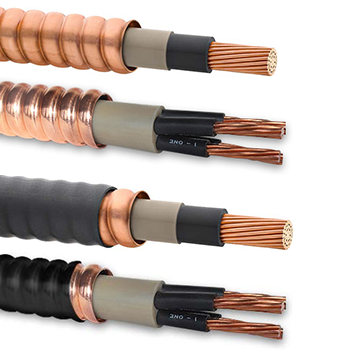
Prysmian’s Lifeline® System represents the world’s widest selection of fire-resistive power cable systems, engineered to ensure circuit integrity even in extreme fire conditions. Lifeline cables are designed and certified to the highest international standards, meeting or exceeding UL 2196 and ULC-S139 requirements for one- and two-hour fire resistance. These advanced solutions help safeguard essential power and communication circuits in high-risk environments, including healthcare, transportation, commercial, and high-rise buildings—minimizing operational losses and supporting life safety when every second matters.​​


The Lifeline® Fire-Resistive Cable Advantage

Lifeline® cables utilize innovative ceramifiable silicone technology and robust armored designs, making them more cost-effective and easier to install than traditional mineral-insulated or concrete-encased wiring systems. They deliver exceptional flame, smoke, and toxicity performance, while certified circuit integrity systems ensure critical power and control circuits remain resilient and operational during fire emergencies.​​

Câbles Lifeline® MC/RC90 et MC/RC90 LSZH gainés : câbles résistants au feu d’une et deux heures(UL-2196/ULC-S139)
 

Fiches produit:

  • Fiche produit des câbles monoconducteurs MC/RC90
  • Fiche produit des câbles multiconducteurs MC/RC90
  • Fiche produit des câbles monoconducteurs MC/RC90 LSZH
  • Fiche produit des câbles multiconducteurs MC/RC90 LSZH 
     

Instructions d'installation:

Présentations du produit et guides rapides


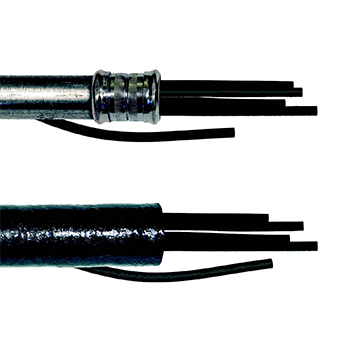
Câbles coupe-feu US Lifeline® RHW-2 en conduit EMT et conduit phénolique BreathSaver® XW (UL 2196)

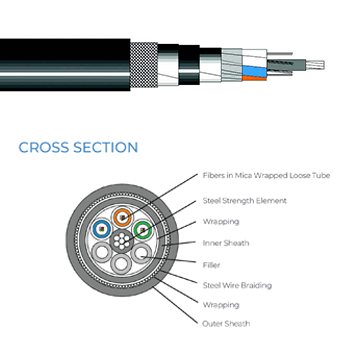
Câble à fibre optique QFCI résistant au feu (homologué UL pour colonnes montantes)

Questions? Contact us

Webform
CAPTCHA
Trouvez la solution de ce problème mathématique simple et saisissez le résultat. Par exemple, pour 1 + 3, saisissez 4.
Cette question sert à vérifier si vous êtes un visiteur humain ou non afin d'éviter les soumissions de pourriel (spam) automatisées.

FAQs

What is the best resource for technical inquiries and questions?

When questions on system limitations or field issues arise, it is recommended that the first contact for assistance be the technical service staff provided by the product manufacturer (system owner) noted for the design. As the system owner of the largest portfolio of fire‑resistive cable systems on the market, Prysmian offers dedicated technical support to address questions on application, design, and installation. Assistance is available through the Lifeline® Fire Rated Cable Systems webpage or by contacting the team directly at [email protected].


What is the Lifeline® System?

The Lifeline® System is Prysmian’s comprehensive family of fire resistive power and control cable solutions, built to maintain power and circuit integrity during severe fire events for up to two hours. It includes a broad portfolio of products tested and certified for both US and Canadian codes, ensuring compliance and life safety for critical applications.​


What makes Lifeline® cables different from standard fire resistive cables?

Lifeline® cables stand apart with their advanced ceramifiable silicone insulation, superior construction, and full one- and two-hour system listings with UL and ULC. They require no specialized tools for installation and offer greater flexibility, lower cost, and simplified project delivery compared to mineral-insulated or concrete-encased alternatives.​


Where are Lifeline® cables typically used?

Lifeline® cables are widely used in tall buildings, hospitals, transportation tunnels, sports arenas, educational institutions, and anywhere reliable, long-duration fire resistance for life safety circuits is required.​


How do fire-resistive cable systems improve safety?

By maintaining circuit functionality for critical power, emergency lighting, ventilation, and communication during a fire, Lifeline® fire-resistive cable systems enable safe evacuation, emergency response, and protection of life and property.​


Where can I find technical specifications and ordering information?

All technical documentation, product sheets, and installation instructions are available in the Product Resources sections above, or by contacting a Prysmian Lifeline cables representative.​


What is the difference between “Flame Retardant” and "Fire Resistive"?

While the terms are often used interchangeably, there is a technical distinction. Flame retardant is designed to prevent the spread of fire along the cable. The cable itself may melt and stop working, but it won't act as a "wick" to propagate flames. Fire resistive (Circuit Integrity) is designed to remain operational (maintain the circuit) for a specified time (e.g., 2 hours) while directly exposed to fire.


What is UL 2196, and why is it so important?

UL-2196 is the testing standard for fire resistive cable systems. A UL-2196 listed system verifies that the cable and installation method maintain electrical functionality during a fire for a specified duration.


What makes up a UL 2196‑certified “system,” and can components be substituted?

A UL 2196 system specifies exact cable, conduit/raceway type, supports, clamps, splices, boxes, and installation spacing. Substitutions are not allowed, and any change invalidates the certification.


Is there a "wet rating" for fire-resistive cables?

Yes, both Lifeline® RHW‑2 and Lifeline® MC are wet-rated. Lifeline® RHW‑2 is listed to UL 44 as a Type RHW‑2 conductor, which means it is rated for 90°C in both dry and wet environments, and this wet rating applies whether the cable is installed in EMT or in BreathSaver® XW phenolic conduit per FHIT.25E. Likewise, Lifeline® MC is listed as Type MC under UL 1569 and is approved for use in wet locations when installed with our LSZH jacketing, making it suitable for tunnels, outdoor environments, and other moisture‑prone installations without compromising its UL 2196 fire‑resistive system rating.


Are fire-resistive cables required in all buildings?

Generally, no. NEC 70, Article 700.10(D) defines the buildings requiring 2 hr. fire protection for critical circuits: (1) Assembly occupancies for not less than 1000 people, (2) Buildings above 23 m (75 ft) in height, (3) Educational occupancies with more than 300 occupants.  Additionally, codes such as NFPA 72 and NFPA 101 mandate "Pathway Survivability." This usually applies to high-rise buildings, hospitals, and tunnels where "defend-in-place" or phased evacuation is necessary, requiring fire alarms and emergency communications to function long after a fire starts.


What codes require the use of 2-hour fire-rated cables?

NFPA codes and NEC articles referencing fire-resistive cable systems include NEC Articles: 517 — Health care facilities, 695 — Fire pumps, 700 — Emergency systems (emergency feeders), 708 — Critical operations power systems (COPS), 728 — Fire-resistive cable systems (renumbered to 772 in NEC 2026), 760 — Fire alarm systems, NFPA 72 (pathway survivability Level 2/3), NFPA 101, NFPA 130, NFPA 502. These codes require 2 hour survivability for emergency circuits in many occupancies.


Can I mix different brands of fire resistive cables?

No. Per 2026 NEC Article 772 (previously 728), fire-resistive cables must be installed as a complete system. This means you must use the specific brand of conduit, couplings, connectors, supports, lubricants and bushings, etc. that were tested with that specific cable in the UL "FHIT" (Electrical Circuit Integrity System) listing. Combining unapproved brands may void compliance.


What are the most common misconceptions about 2-hour fire-rated cable systems?

Misconception A — “If a room is 2-hour rated, I don’t need 2-hour cable.” Inside the 2-hour room, this can be true, but once the circuit leaves the room, it must transition to an approved 2-hour wiring or protective method.

Misconception B — “Adding conduit improves any fire rated cable.” False. A cable must only be installed in a raceway if the UL 2196 listing includes that raceway.

Misconception C — “Any splicing method is acceptable.” Only UL-approved splice kits for the specific FHIT system may be used when installed in the fire zone it serves.

Misconception D – “Pulling other wires through the same conduit as fire-resistive cables is OK.” No. You cannot install standard building wire or communication cables in the same conduit as fire-resistive cables. The melting of the standard wire could cause a short circuit or chemical reaction that compromises the 2-hour performance of the resistive cable.